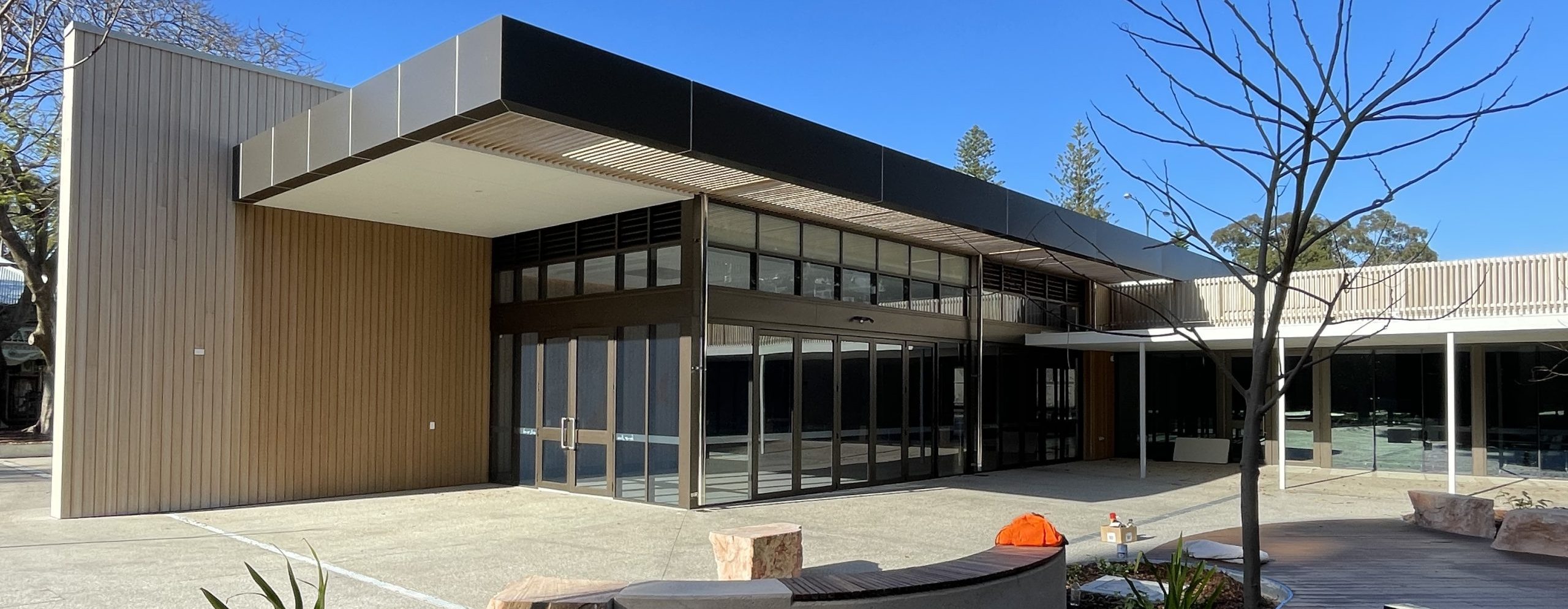
From skate parks to stadiums, timber is bringing atmosphere, strength, and identity to public places.
Across Australia, a quiet design revival is transforming the way communities engage with public infrastructure. Timber, once confined to traditional applications is now at the heart of contemporary sport and recreation design. Its warmth, sustainability, and engineering adaptability are making it a material of choice for civic projects focused on connection, movement, and long-term performance.
Long valued for its warmth, sensory appeal, and versatility, timber is increasingly being chosen for public environments where design must meet durability. Whether in the structure beneath a basketball court or the flowing formwork of a skate park, or in curved skate ramps and nature-integrated pathways, timber offers a combination of performance, sustainability, and visual presence that few materials can match. It is enabling spaces that feel both functional and inviting, bringing communities together in uniquely local ways.
“Timber offers a unique combination of performance and atmosphere,” says Big River Group’s Francis Cox, Regional Manager WA & SA. “In high-use public spaces, it brings structural strength, but also a kind of character that helps shape how people feel and move within the space.”
Recreational infrastructure demands materials that can withstand constant use while still contributing positively to the surrounding environment. Timber meets this challenge head-on. Its strength, adaptability and tactile qualities offer a rare combination that few other building materials can match.
One striking example is the recently completed Kalgoorlie Boulder Basketball Stadium in Western Australia, where timber played a foundational role both literally and visually, in transforming the space. Supplied by Big River Group and installed by WA Hardwood Floors, more than 2,400 sheets of engineered structural plywood were used to form the subfloor foundation. The plywood met AS/NZS 2269 structural standards, with stress grading up to F14, and was manufactured from plantation-grown Radiata Pine, ensuring both performance and environmental responsibility. The finished surface, a polished maple court, delivers the performance required for elite sport, while offering a sense of warmth and refinement that elevates the venue beyond functionality.
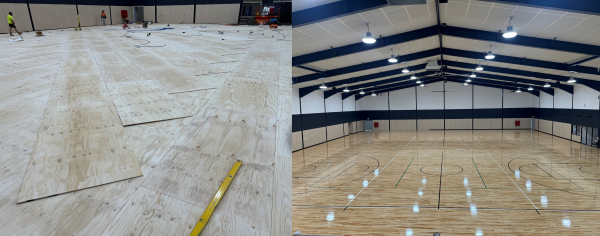
The redevelopment added two new indoor courts to complement the existing three, including a showcourt with grandstand seating for approximately 1,200 spectators. As the home of the Goldfields Giants in WA’s top-tier NBL1 competition, and a base for local senior and junior leagues, the stadium now serves as a regional anchor for both sport and community.
The venue’s airy interior, accented with natural timber, enhances the experience for both players and spectators. It’s a reminder that materials contribute not only to how a space performs, but also to how it feels. Cox describes how this balance of form and function is exactly why timber continues to be chosen for civic centres. “For high-use environments like Kalgoorlie, timber not only delivers on durability and ease of construction, but it also creates a space people want to be in. That matters, because these venues aren’t just about sport, they’re about community,” he says.
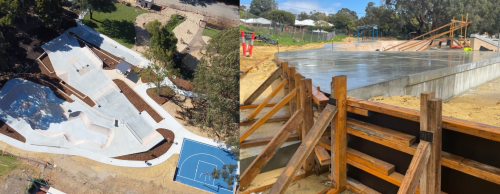
The idea that timber connects people to place is also evident at Stirk Park Skate Park in Kalamundra in Western Australia. The reimagined and beloved community space with a design that draws inspiration from the area’s iconic Zig Zag trail. Nestled among mature trees and natural bushland, the park’s expansive concrete layout features deep bowls, sculpted transitions, and tiered platforms, brought to life through the precision of engineered timber formwork. Products including Laminated Veneer Lumber (LVL) E-Form, DeckPly F17, and supporting framing solutions allowed the park to follow the contours of the landscape, reinforcing a strong connection to place while ensuring structural integrity and long-term durability. DeckPly F17 formwork is engineered to AS 6669 and AS/NZS 2269 standards, with a durable marine-grade phenolic ‘A’ bond overlay that ensures a smooth concrete finish and longevity. The result is a space that balances performance with local identity, making timber not just a construction material, but a tool for storytelling and community pride.
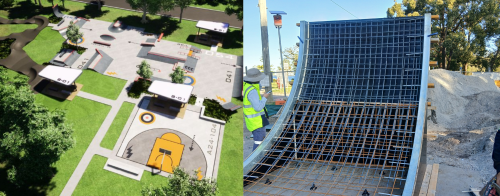
“What we love seeing is how timber helps ground these spaces in their environment,” Cox explains. “It’s a material that feels natural, works with curves, and performs long-term which is exactly what these outdoor spaces need.”
In Mt Druitt, New South Wales, the recently completed Rathmines Skate & Youth Park showcases how timber, specifically Armourform Bending Ply 2400x1200x9mm enabled the creation of fluid curves, vertical features, and layered transitions essential to modern skate park design. The adaptability of timber formwork brought sculptural complexity and precision to the build, shaping a space designed for movement, progression and play. Timber’s role was critical in delivering a design that invites young people to engage with their environment in active, expressive ways.
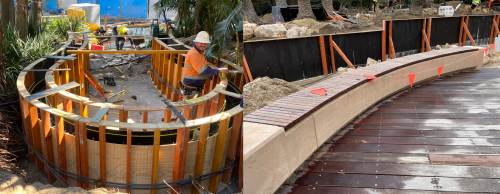
Meanwhile at Perth Zoo, timber formwork played a vital role in delivering a network of curved retaining walls, flowing pathways, and naturalistic interactive spaces. Set within lush greenery, the completed play and leisure precinct integrates concrete and timber-based infrastructure seamlessly into the surroundings. The use of LVL, DeckPly, and ArmourForm supported the creation of elegant, curved forms that enhance the visitor experience while standing up to the demands of high daily foot traffic. The project is a clear example of how timber can enable playful, durable, and environmentally conscious design outcomes.
As governments and developers increasingly seek out sustainable, low-carbon materials that align with long-term infrastructure goals, timber is fast becoming the material of choice. Its renewability, low embodied energy, and growing range of high-performance formats make it ideal for public spaces that need to last both physically and socially.
“Recreational spaces are more than just built environments, they’re places where identity and community are forged,” explains Cox. “Timber brings those places to life beyond function – in a way that’s human, warm, and enduring.”
From inner-city youth parks to regional sports facilities, the renewed embrace of timber is helping to shape inclusive, functional, and future-focused spaces across Australia, proving that wood has a powerful role to play in our public lives, serving to ground the projects in their landscape and community, reflecting local identity and materials.”