
Formply
Formply is not a general-purpose plywood. It is a structural plywood panel with a film-faced surface, manufactured to AS 6669 for use as the face of concrete formwork. The film face releases cured concrete cleanly and protects the panel between pours.
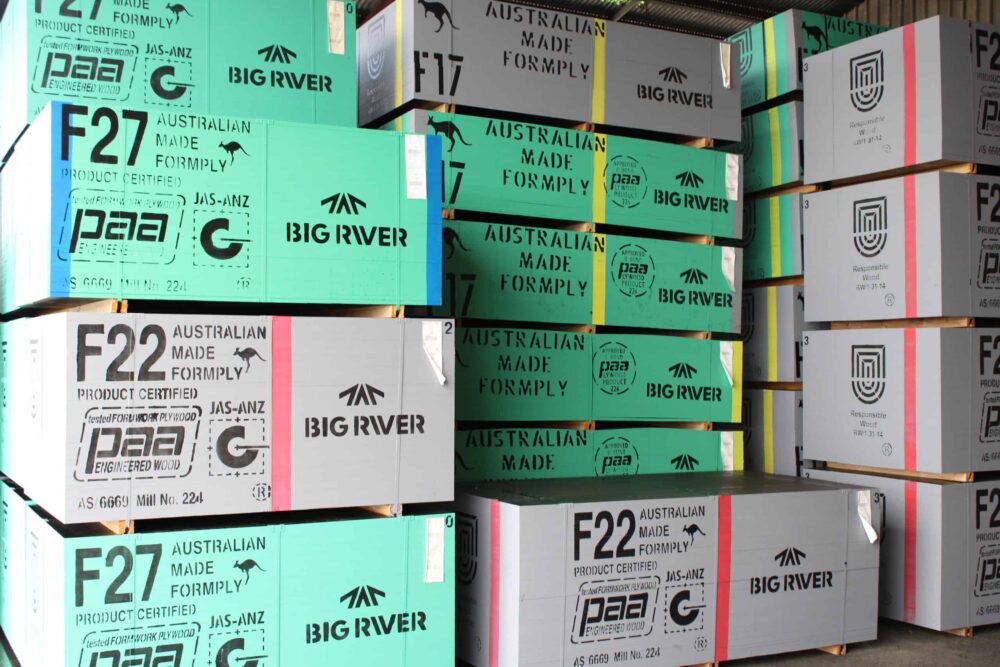
Big River has manufactured formply at its Grafton NSW mill for over 40 years, in F17, F22 and F27 stress grades, EWPAA stamped and JAS-ANZ accredited, with PEFC chain-of-custody certification (PEFC/21-31-174).
Showing 3 products
Clearance Sale now on.
Shop the SALE now
ArmourForm F17 Formwork Plywood
Structural plywood for concrete formwork. F17 stress grade.
Residential and commercial concrete formwork

ArmourForm F22 Formwork Plywood
Structural plywood for concrete formwork. F22 stress grade.
Commercial and residential concrete formwork

ArmourForm F27 Formwork Plywood
Structural plywood for concrete formwork. F27 stress grade.
Commercial concrete formwork
How to Choose the Right Formply
What stress grade formply do I need?
The stress grade you need depends on the loads in your formwork design and how many pours you want from each sheet. F17 suits most residential and light commercial work: slabs, footings and tilt-up panels. F22 offers a higher strength-to-weight ratio for system formwork and multi-storey pours where reuse cycles matter. ArmourForm F27 is total hardwood construction, engineered for heavy civil applications including table forms, jump forms and mining infrastructure, with 50 or more castings achievable under good site practice.
| Grade | Typical application | Reuse expectation | Finish class |
|---|---|---|---|
| F17 | Slabs, footings, tilt-up panels, residential and light commercial | Confirm with your branch | Class 2 on first pour with appropriate release agents |
| F22 | System formwork, multi-storey pours where reuse cycles matter | Confirm with your branch | Class 2 on first pour with appropriate release agents |
| ArmourForm F27 | Heavy civil: table forms, jump forms, mining infrastructure | 50 or more castings under good site practice | Confirm with your branch |
What concrete finish will formply give?
AS 3610 defines off-form concrete finish classes from Class 1 (architectural, the most demanding) through Class 5 (concealed surfaces where appearance does not matter). The class you specify drives the formwork face you need, how it is prepared, and how many pours a sheet can deliver at that standard. Standard Big River formply reliably achieves Class 2 finishes on the first pour when used with appropriate release agents. For projects where a superior Class 2 result is specified, Big River’s Off-Form Premium formply is designed for commercial and residential work at that level. Talk to your branch about matching the sheet to the finish class in your specification. See also the full formwork range and Deckply F17.
Frequently Asked Questions
What is the difference between structural plywood and form plywood?
Structural plywood and formply are certified to different Australian Standards for different jobs. Structural plywood is manufactured to AS/NZS 2269 for load-bearing applications such as flooring, bracing and roofing. Formply is manufactured to AS 6669 specifically for concrete formwork: it carries a film face engineered to release concrete and deliver a specified off-form finish. Big River manufactures both at its Grafton NSW mill, so the distinction is one we certify to, not a marketing label.
How thick is formwork plywood?
The thickness you need is set by your formwork design: the spacing of bearers and joists, the pour depth and the load during placement. Big River formply is manufactured in a range of thicknesses to AS 6669. Confirm stocked thicknesses with your branch against your design before ordering.
Is formply better than marine ply?
Neither is better. They are built for different jobs. Marine plywood is graded to AS/NZS 2272 for void-free construction and prolonged moisture exposure, which suits boat building and permanently wet environments. Formply is graded to AS 6669 for the structural load and surface finish of a concrete pour, with a film face designed to release concrete. Using marine ply as formwork pays for properties a pour does not need, and using formply in a marine application relies on a certification it does not hold.
How long will formply last outside?
There is no single number, because service life outdoors is governed by site practice rather than the sheet itself. The condition of the film face, whether cut edges are resealed, how sheets are cleaned and stacked between pours, and the number of castings all determine how long a sheet stays serviceable. Stored flat, edge-sealed and out of standing water, formply lasts substantially longer than sheets left exposed on site. A specific month figure would be a guess, and we will not publish one.
What is formply good for?
Formply is purpose-built as the contact face of concrete formwork: slabs, footings, columns, walls, tilt-up panels and system formwork. The film face delivers a consistent off-form finish and releases cleanly, and stress-graded construction carries the live load of a pour. Within the Big River range, F17 covers most residential and light commercial pours, F22 suits system formwork and multi-storey work, and ArmourForm F27 handles heavy civil applications.
What plywood is used for formwork?
Film-faced formply certified to AS 6669 is the plywood made for formwork. Standard structural plywood to AS/NZS 2269 will carry load, but it lacks the release face and the finish-class performance that formwork requires, so it is not a substitute where the concrete surface matters. Big River manufactures formply at Grafton in F17, F22 and F27 stress grades, all EWPAA stamped and JAS-ANZ accredited.
Does paint stick to formply?
Paint adheres poorly to formply, and that is by design. The film face exists to release cured concrete, which is the opposite of what paint adhesion needs. If you are repurposing used formply for a painted application, the film face must be fully abraded or removed before any coating will hold, and even then adhesion depends on surface preparation. For work that will be painted, a plywood without a release face is the right starting point.
Visit Your Local Big River Location
Find specialist building products and expert advice at your nearest Big River Location.