
AAC Cladding and Wall Panels
Autoclaved Aerated Concrete (AAC) is a lightweight, non‑combustible wall system that delivers strong fire, thermal and acoustic performance with easier on‑site handling. CodeMark‑certified AAC panels provide a clear NCC‑compliant solution, including suitability for BAL‑FZ bushfire construction.
Explore our AAC guides: installation guide, panel prices, AAC vs brick comparison and where to buy AAC panels.
Showing 3 products

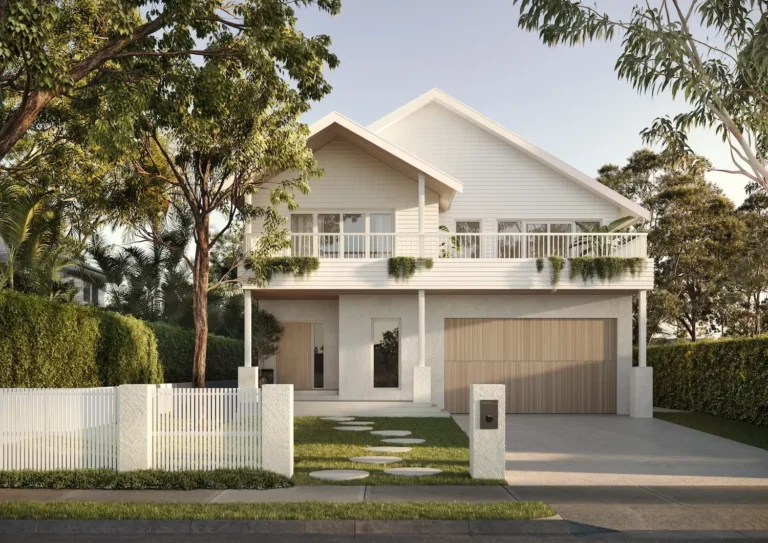
Hardie™ Gravis™ Panel
Hardie™ Gravis™ Panel provides a render ready surface ideal for a cohesive modern facade or standout feature wall. Hardie™ Gravis™ Panel Floor also available.

Helix AAC
Helix AAC Panels are a next-generation external wall system that combines the strength of concrete with outstanding thermal and acoustic performance.
Bushfire-prone area construction

MaxiWall AAC Panel System
Lightweight AAC wall panel system for fast internal and external walling.
Fast, cost-effective walling for residential and commercial
Related Guides
How to Choose the Right AAC
Start with the application. For external walls on houses and low-rise multi-residential projects, the MaxiWall AAC panel system has fully documented 50mm and 75mm external wall systems, both covered by CodeMark Certificates of Conformity, with certified panel fire ratings of -/120/120 (50mm) and -/180/180 (75mm).
For party walls between attached dwellings, the documented MaxiWall party wall system meets the NCC requirement of a 60/60/60 fire resistance level and is designed to achieve Rw+Ctr 50 using discontinuous construction – the fire and acoustic separation the code demands without double-brick weight.
For high-rise internal walls, MaxiWall has a dedicated non-load-bearing internal wall manual with systems tested to AS 1530.4-2005, suited to apartment corridors, inter-tenancy and services walls.
For architectural facades, Helix AAC panels come in 50mm and 75mm thicknesses, 600mm wide, in lengths up to 3300mm, with the same AAC benefits of fire resistance, acoustic insulation and thermal performance.
In bushfire-prone areas, AAC’s non-combustibility makes it the strongest choice in our cladding range for high-BAL sites.
All stocked panels are 600mm wide and install with standard construction tools – MaxiWall panels weigh 44kg to 73kg each, so a two-person crew can handle them without lifting equipment. Check current AAC panel pricing, find your nearest stockist, or read the installation guide before you order.
Application guides: AAC external walls, fire rated AAC panels, acoustic walls and thermal performance.
Why specify AAC?

Where is AAC used?
AAC wall panels are widely used across residential and commercial construction in Australia. In Class 1 residential housing, AAC is commonly specified in bushfire-prone areas and high BAL zones where non-combustible external wall systems are required.
For Class 2 multi-residential and mixed-use buildings, AAC is a practical party wall solution, delivering the fire separation and acoustic performance required under the NCC without the weight and complexity of traditional masonry. Commercial and industrial projects also specify AAC panels for external walls where speed of construction, fire compliance, and thermal performance are priorities.

AAC vs Other Materials
AAC’s primary advantage over fibre cement and timber cladding is its non-combustibility – it is the only material in Big River’s cladding range that is compliant to BAL-FZ, making it suited to high bushfire risk sites and multi-storey construction. It also delivers greater acoustic performance and can form a complete structural wall system, not just an external cladding layer. Fibre cement offers a thinner profile and a wider range of surface finishes, making it more flexible aesthetically for standard residential work.
Timber delivers a premium natural aesthetic but requires ongoing maintenance and has limited BAL compliance beyond BAL-19 without specific system configurations. For high fire risk and multi-storey projects, AAC is the technically superior specification.
| Attribute | AAC (MaxiWall / Helix) | Brick | Fibre cement | Timber |
|---|---|---|---|---|
| Weight | About one fifth the mass of conventional concrete; 75mm panel 31 kg/m2 | Heavy solid masonry | Lightweight sheets and boards | Lightweight boards |
| Fire performance | Non-combustible; certified panel FRLs of -/120/120 (50mm) and -/180/180 (75mm) | Non-combustible masonry | Suited to BAL-rated systems | Limited BAL compliance beyond BAL-19 without specific system configurations |
| Acoustic | Documented external systems achieve Rw 38 to 42; party wall systems designed to meet Rw+Ctr 50 | High mass-based insulation | Depends on wall build-up | Depends on wall build-up |
| Speed of construction | 600mm-wide panels cut with standard tools; no wet masonry trades | Slowest – laid brick by brick | Fast sheet fixing | Fast board fixing |
| Role in the wall | Complete walling system – external, party and internal walls | Structural wall or veneer | External cladding layer | External cladding layer |
Fire and Acoustic Performance for Specifiers
Big River’s AAC wall systems carry CodeMark Certificates of Conformity (CM40353 for the 50mm panel, CM40354 for the 75mm panel), with fire resistance assessed by IGNIS Labs from testing to AS 1530.4. The certified panel ratings are an FRL of at least -/120/120 for the 50mm panel (510 kg/m3 nominal dry density) and at least -/180/180 for the 75mm panel (400 kg/m3 nominal dry density).
| System | Fire | Acoustic | Thermal |
|---|---|---|---|
| 50mm external wall (houses and low-rise) | Panel FRL at least -/120/120 | System dependent | Panel R0.29; total system R-value built up with insulation per guide |
| 75mm external wall | Panel FRL at least -/180/180 | Rw 38 to 42 (Rw+Ctr 23 to 27) across documented lining systems | Panel R0.60; total system R-value per guide for NCC J4D6 / H6D2 compliance |
| Party wall (low-rise residential) | Meets NCC 60/60/60 requirement | Designed to meet NCC Rw+Ctr 50 with discontinuous construction | Per system manual |
| High-rise internal walls | Tested to AS 1530.4-2005 | Per system manual | Non-load-bearing partitions |
Full system manuals, installation guides and the CodeMark certificates are available from the MaxiWall product page downloads section, and our AAC installation guide covers on-site practice. For project-specific specification support including quote take-offs, talk to the Big River team.
Frequently Asked Questions
What are AAC panels?
Autoclaved aerated concrete (AAC) panels are lightweight concrete wall panels reinforced with corrosion-protected steel mesh. Aerating the concrete creates millions of tiny air pockets, producing a panel about one fifth the mass of conventional concrete that is non-combustible and insulates against heat and sound. Big River supplies AAC panels under the MaxiWall and Helix brands, both 600mm wide in 50mm and 75mm thicknesses.
What sizes do AAC panels come in?
MaxiWall panels are stocked 75mm thick and 600mm wide in lengths of 1800mm to 3000mm, weighing 44kg to 73kg per panel. Helix panels come 600mm wide in 50mm thickness (lengths to 3000mm) and 75mm thickness (lengths to 3300mm). A certified 50mm MaxiWall system is also documented for external and party walls.
What fire ratings can AAC panels achieve?
Independent testing assessed by IGNIS Labs to AS 1530.4 certifies a fire resistance level of at least -/120/120 for the 50mm MaxiWall panel and at least -/180/180 for the 75mm panel (CodeMark Certificates CM40353 and CM40354). Documented party wall systems meet the NCC 60/60/60 requirement. AAC is non-combustible, which is why it is widely specified for fire-rated and bushfire-prone construction.
Are AAC panels suitable for bushfire areas?
Yes. AAC is non-combustible and is the strongest performer in our cladding range for high bushfire risk sites, suited to high-BAL construction where non-combustible external wall systems are required. Confirm the specific system build-up for your BAL rating with the relevant installation guide or the Big River team.
Which AAC panel should I choose - MaxiWall or Helix?
Choose MaxiWall when you need a complete walling system. It has documented external wall, party wall and high-rise internal systems with CodeMark certification. Choose Helix for architectural facade work, with panels up to 3300mm long and the supporting top hats, screws and adhesive supplied as a system. Both are stocked through Big River trade centres nationally.
Visit Your Local Big River Location
Find specialist building products and expert advice at your nearest Big River Location.