Big River’s timber helps build an oasis in the heart of Sydney
 The design brief for this ‘forever home’ called for a world-class visitor experience that included a tropical or subtropical woodland eco system to show a great diversity of Savannah animals and plant life. The new African Savannah habitat known as ‘The Waterhole’ located at Taronga Zoo, Sydney, was designed to represent an open grassland of sub-African vegetation and is a stunning landscape that is home to the Giraffe, Zebra, Lion, Meerkat and Fennec Fox.
As part of Taronga Zoo’s $150 million revitalising and facility upgrade over the next 10 years, the African Savannah precinct, brings together a lion breeding facility, and an expanded savannah for giraffes, zebras and fennec foxes, as well as a specialised meerkat encounter space. The aim is to enhance guest experience by providing an innovative non-exhibit integrated with the surrounding landscape allowing for an upfront visitor experience.
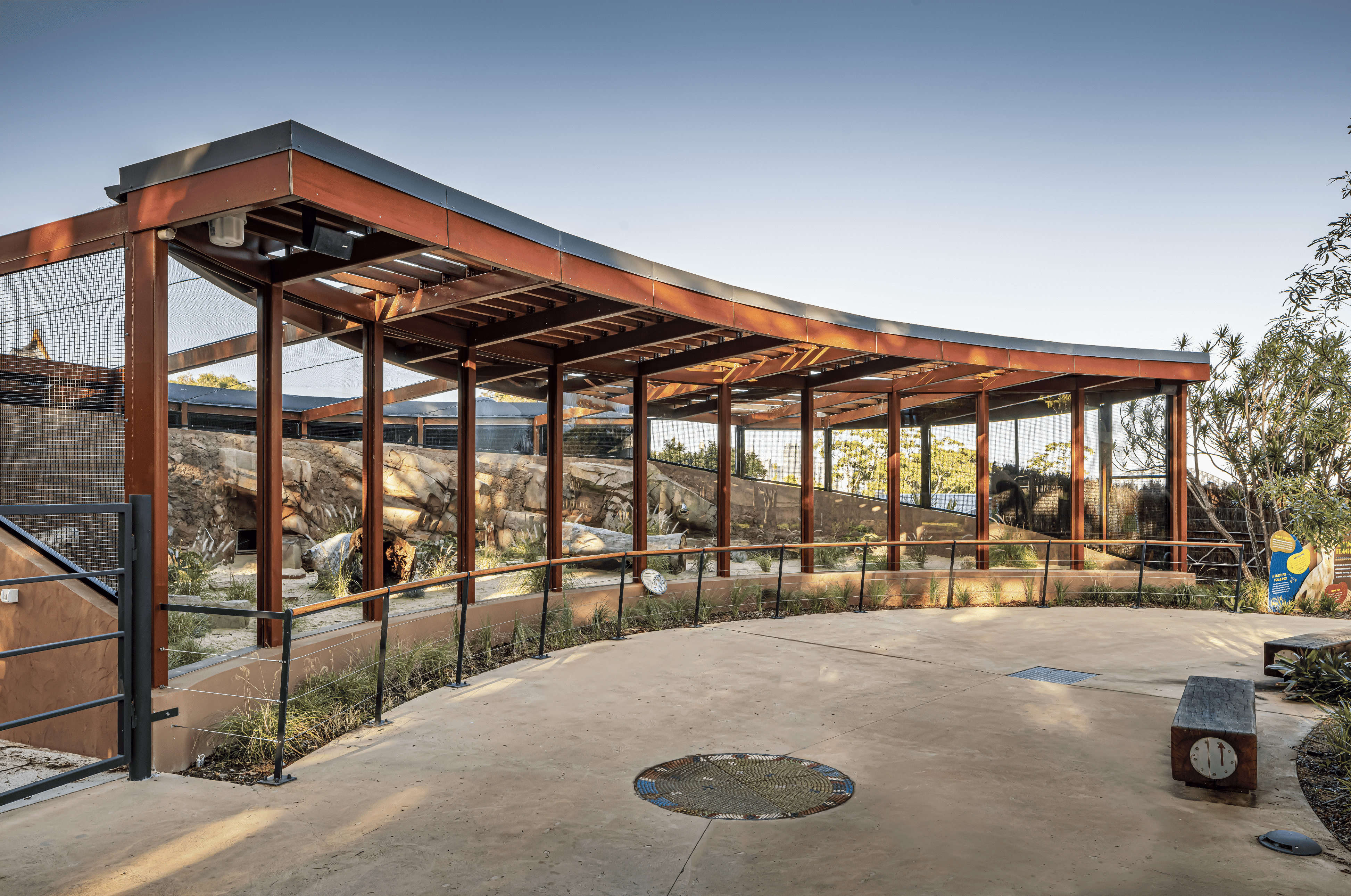
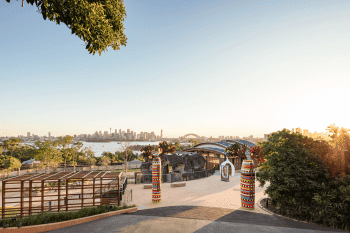 With an emphasis on replicating the animal’s habitats as well as meeting specific sustainability targets, it was imperative the building materials chosen were fit-for-purpose, providing a functional as well as natural environment, where timber played a significant role. Designed by Tonkin Zulaikha Greer Architects, constructed by Brenic Constructions working with Zaumer Constructions, the builders engaged Big River Group as its leading timber supplier. Robust timbers were chosen including recycled hardwood, spotted gum and blackbutt hardwood and plywood, for their long life, durability, sustainable properties and local availability.
“The nature of the build made it important to use timber products,” says Brendan Abric from Brenic Constructions. “It needed to be sympathetic to the landscape while ensuring that major structures and infrastructure wasn’t obtrusive. What we have achieved has provided a unique connection with the elements of nature in which this multi-species habitat required.”
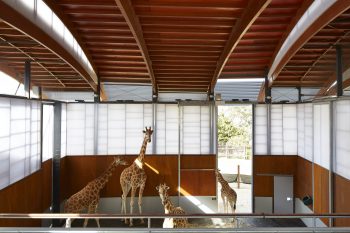
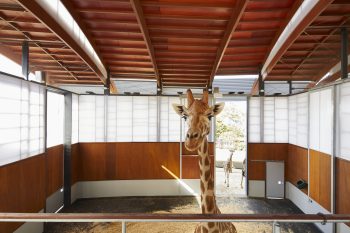 Featuring exposed Blackbutt and Spotted Gum rafters, the Giraffe House is a stunning circular design incorporating an all timber construction including marine plywood, the highest grade veneer, offering increased impact resistance, minimising water penetration and a high quality finish. The veneer has been stained to blend in with the earthy surrounds.
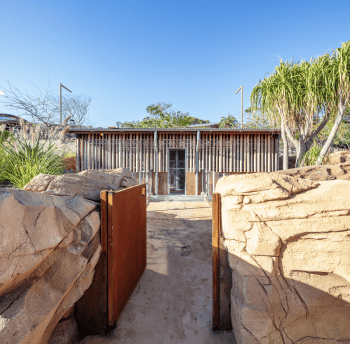
Round hardwood poles in varying diameters that had been cast offs from the plywood manufacturing process at Big River Group’s Grafton mill have been upcycled and utilised as an external cladding on the Meerkat enclosure, marrying back with the completely natural environment.
Western red cedar, known for its attractive appearance and beautiful grain patterns, resistance to weather and exceptionally high dimensional stability rating unequalled by any other timber in commercial use in Australia, provides the backdrop for the lion keeper talks auditorium, with a striking floating timber ceiling.
The design and use of building materials on the amenities block are in keeping with the Savannah landscape with Blackbutt and Spotted Gum Hardwood being chosen due to their superior performance qualities including a tolerance to changes in ambient temperatures, durability and resilience that make them perfect for hard wearing areas.
 Key initiatives such as the use of renewable materials, recycled water and design choices to minimise the energy footprint drove the sustainable vision of the project. Timbers provided by Big River Group, sustainably sourced in Australia, were part of a carefully selected materials palette that would not only meet the project’s environment-friendly and sustainable goals but also seamlessly integrate into the natural setting.
“The African Savannah is a magnificent gateway to Africa in the heart of Sydney. To stand back and see such magnificent structures built with natural and earthy materials, used to create a jungle oasis in the heart of Sydney is really special,” concludes Abric.